 Save to Pinterest
 The first time I made shakshuka on a lazy Sunday morning, I wasn't trying to impress anyone—I just wanted something warm and filling that didn't require much thought. I had a can of tomatoes sitting in my pantry, some peppers going soft in the crisper, and an idea that poaching eggs in sauce sounded better than scrambling them for the third time that week. Twenty minutes later, I was tearing into crusty bread, chasing runny yolks through spiced tomato sauce, and wondering why it took me so long to discover this dish.
I made this for friends once after a late night out, and something about the smell of cumin and paprika sizzling in hot oil seemed to cure everyone's exhaustion instantly. We crowded around the skillet, passing bread back and forth, and nobody wanted to leave the kitchen. That's when I realized shakshuka isn't just food—it's an excuse to linger and eat together.
Ingredients
- Yellow onion: Diced and softened first, it becomes the sweet backbone of the sauce—don't skip the sauté step.
- Red and green bell peppers: They add brightness and a gentle sweetness that balances the spices.
- Garlic cloves: Minced small so it distributes evenly and doesn't overpower.
- Canned diced tomatoes: Use good quality—the flavor matters here since tomato is the main event.
- Jalapeño: Seeded for gentler heat, or leave the seeds in if you like a real kick.
- Olive oil: Good oil makes a difference; use what you'd drizzle on bread.
- Tomato paste: A concentrated punch that deepens the sauce without adding liquid.
- Cumin, smoked paprika, and coriander: This trio is the soul of the dish—don't be shy with them.
- Cayenne pepper: Optional, but it's what makes people ask if something's different about your sauce.
- Eggs: Large eggs work best; they cradle better in the sauce wells.
- Fresh cilantro or parsley: Scattered at the end, it adds a bright finish.
- Feta cheese: Crumbled on top, it's creamy and salty—optional but highly recommended.
- Crusty bread: For dunking and soaking up every last bit of sauce.
Tired of Takeout? 🥡
Get 10 meals you can make faster than delivery arrives. Seriously.
One email. No spam. Unsubscribe anytime.
Instructions
- Build your aromatic base:
- Heat olive oil in a large skillet over medium heat, then add diced onion and peppers. Let them soften for 5 to 6 minutes, stirring occasionally so they cook evenly without browning. You'll know they're ready when they've lost their raw edge and smell sweet.
- Wake up the spices:
- Stir in minced garlic and jalapeño, cooking for about a minute until the kitchen smells intensely fragrant. Add tomato paste along with cumin, smoked paprika, coriander, and cayenne, stirring constantly for 2 minutes so the spices bloom and darken slightly.
- Simmer the sauce:
- Pour in the canned tomatoes with their juices, then season generously with salt and pepper. Let everything bubble gently uncovered for 10 to 12 minutes, stirring now and then, until the sauce thickens and tastes balanced—adjust seasoning if needed.
- Create egg nests:
- Using the back of a spoon, gently press 6 shallow wells into the sauce, spacing them evenly. Crack one egg into each well, keeping the yolks intact.
- Poach gently:
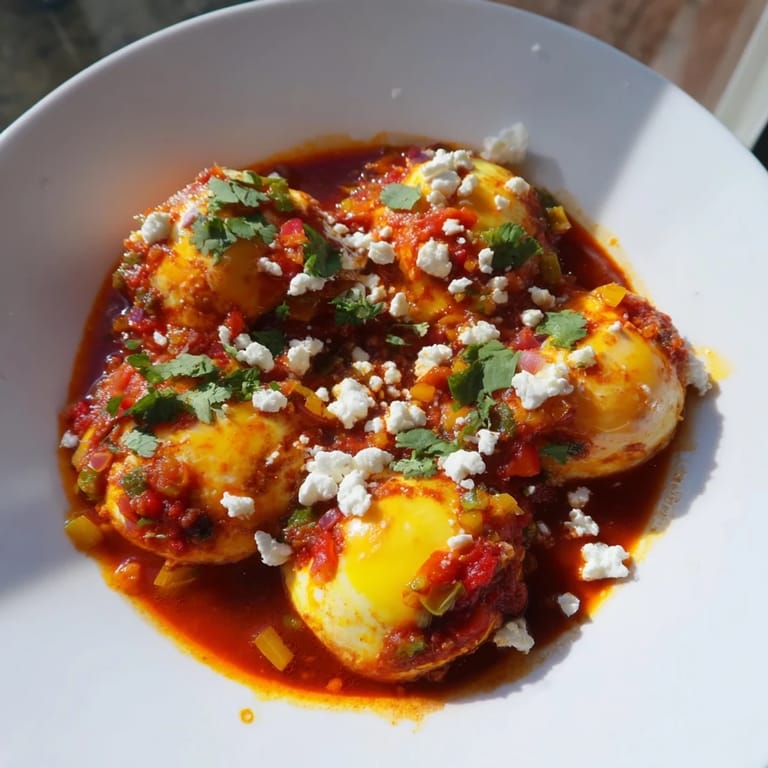
- Cover the skillet and reduce heat to medium-low, cooking for 6 to 8 minutes until the egg whites set but yolks remain runny. Peek under the lid after 5 minutes to check progress.
- Finish and serve:
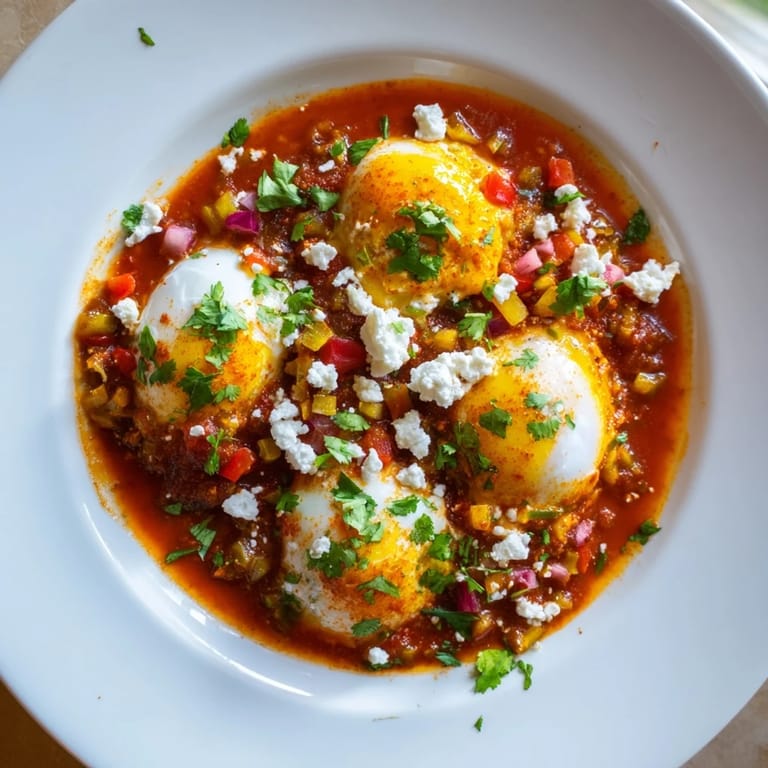
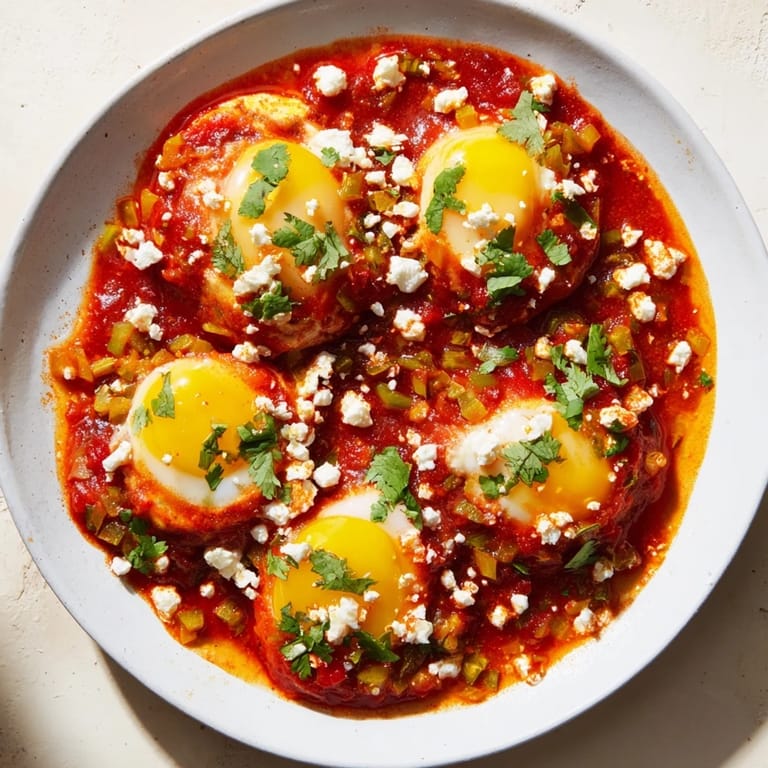
- Remove from heat, scatter fresh herbs and crumbled feta across the top, then bring the whole skillet to the table with warm bread alongside.
 Save to Pinterest
 The best part of making shakshuka is that moment when you uncover the skillet and see those golden yolks sitting in their spiced tomato beds. It feels like a small victory every single time, no matter how many times you've made it.
How to Get Perfect Runny Yolks
The yolk texture is everything in shakshuka, and it's easier to control than you'd think. Keep your heat at medium-low once you add the eggs—rushing the cook will set the yolks, and there's no going back. If your skillet doesn't have a good lid, even aluminum foil works; the important thing is trapping steam so the whites set from both sides while the yolk stays liquid gold in the center.
Variations Worth Trying
Once you've made the basic version a few times, you'll start improvising. Some mornings I add crumbled chorizo or spicy sausage browned separately before the sauce—it adds richness and a smoky layer. Other times I skip the feta and serve with a dollop of Greek yogurt or labneh for creaminess. Even the bread matters; pita is traditional, but a crusty sourdough tears into the sauce differently and tastes amazing.
Timing and Serving Strategy
Shakshuka waits for no one once it's plated, so make sure everyone's ready to eat before you cover that skillet. I've learned to set the table, warm the bread, and gather any garnishes beforehand—those last 8 minutes go fast, and you don't want anything getting cold while you're searching for feta in the back of the fridge. Leftovers reheat beautifully in a skillet over low heat, though reheating the eggs tends to set the yolks firm, which some people prefer anyway.
- Warm your bread in the oven or toaster right before serving for the best texture.
- Use a shallow spoon or ladle to scoop sauce and egg together into bowls.
- Leftover sauce keeps in the fridge for three days and makes an excellent base for other dishes.
 Save to Pinterest
 Shakshuka has a way of turning an ordinary morning into something special. Even when you're making it alone, there's something generous and nourishing about it.
Recipe FAQs
- → What vegetables are used in this dish?
Yellow onion, red and green bell peppers, garlic, and optional jalapeño provide the base flavors.
- → How do you achieve perfectly cooked eggs in the sauce?
Make small wells in the simmering tomato sauce, crack in the eggs, then cover and cook until whites set but yolks remain runny.
- → Can the spice level be adjusted?
Yes, adjusting jalapeño and cayenne amounts lets you control the heat to your preference.
- → What breads pair well with this dish?
Crusty bread, pita, or gluten-free bread varieties are ideal for dipping and soaking up the sauce.
- → Are there variations for different diets?
Yes, adding cooked sausage or chorizo enriches it, while tofu can substitute eggs for a vegan option.