 Save to Pinterest
 My grandmother's kitchen smelled like cast iron and buttermilk on Saturday mornings, and biscuits and gravy was the reason. She'd have them ready before anyone else woke up, the biscuits steaming on a worn platter while the gravy bubbled quietly on the back burner. Years later, I realized she made it look effortless because she understood that the magic wasn't in complexity—it was in cold butter, minimal handling, and the kind of comfort that only comes from doing something exactly right. This is the recipe that changed how I think about breakfast.
I made this for my dad one Sunday after he mentioned offhand that he hadn't had a proper biscuits and gravy breakfast in years. He ate three biscuits, cleaned his plate, and told me it reminded him of diners he used to visit as a kid. That's when I understood that sometimes the best meals aren't about impressing anyone—they're about making someone feel remembered.
Ingredients
- All-purpose flour (2 cups): The foundation for tender biscuits; don't sift it beforehand, just spoon and level for consistent results.
- Cold unsalted butter (1/2 cup): Cut into small cubes and keep it in the freezer until the last moment—warm butter ruins the flaky layers.
- Cold buttermilk (3/4 cup): The acid reacts with baking soda to create lift and tender crumb; warming it even slightly changes the texture.
- Baking powder and baking soda (1 tablespoon and 1/2 teaspoon): Work together to give you rise without overmixing.
- Salt and sugar (1 teaspoon and 1 tablespoon): Salt enhances flavor, sugar browns the biscuit tops beautifully.
- Breakfast sausage (1 pound): Choose mild if you want subtlety, spicy if you like heat; the quality of the sausage matters as much as the gravy technique.
- Whole milk (3 cups): Creates a silky gravy; don't use low-fat or it'll taste thin and disappointing.
- Black pepper (1/2 teaspoon): Freshly ground is non-negotiable—it's the flavor that defines Southern gravy.
- Cayenne pepper (pinch): Optional but worth it if you want a subtle warmth underneath the richness.
Tired of Takeout? 🥡
Get 10 meals you can make faster than delivery arrives. Seriously.
One email. No spam. Unsubscribe anytime.
Instructions
- Prepare Your Workspace:
- Get your oven to 450°F and line a baking sheet with parchment paper while you work on the dough. This is the one time in cooking where being ready ahead of time actually matters.
- Build the Dry Base:
- Whisk flour, baking powder, baking soda, salt, and sugar in a large bowl. You're looking for everything evenly distributed so the leavening agents do their job right.
- Cut in the Cold Butter:
- Add cold butter cubes and use a pastry cutter, two forks, or your fingertips to break them into the flour until it resembles coarse breadcrumbs with some pea-sized pieces still visible. This texture is what creates those tender, flaky layers when heat hits it.
- Add the Buttermilk Gently:
- Pour in cold buttermilk and stir with a fork just until the dough comes together—it should look slightly shaggy and barely mixed. Overmixing develops gluten, which makes biscuits tough instead of tender.
- Fold the Dough for Layers:
- Turn the dough onto a lightly floured surface and gently pat it to about 1-inch thickness. Fold it in half, pat it back out to 1-inch, and repeat 2-3 times total—this creates the flaky sheets you're after.
- Cut Your Biscuits:
- Use a 2.5-inch biscuit cutter, pressing straight down without twisting (twisting seals the edges and prevents rise). Place biscuits close together on the baking sheet so they support each other as they bake.
- Bake Until Golden:
- Bake 12-15 minutes until the tops are deep golden brown. They'll continue cooking slightly after you pull them out, so don't wait until they're dark.
- Brown the Sausage:
- While biscuits bake, cook 1 pound crumbled sausage in a large skillet over medium heat, breaking it apart as it cooks. You want it fully browned and the fat rendered out—this is flavor.
- Make the Roux:
- Sprinkle flour over the cooked sausage and stir constantly for 1-2 minutes until the flour absorbs the fat and loses its raw taste. Don't rush this step; it's what prevents lumpy gravy.
- Add Milk Slowly:
- Pour milk in gradually while stirring constantly, especially at the beginning when the mixture is thickest. This patience prevents lumps that even whisking won't fix later.
- Simmer and Season:
- Bring the gravy to a gentle simmer and cook 5-7 minutes until it thickens enough to coat the back of a spoon. Add black pepper, salt, and cayenne, then taste and adjust because every sausage brand seasons differently.
- Finish and Serve:
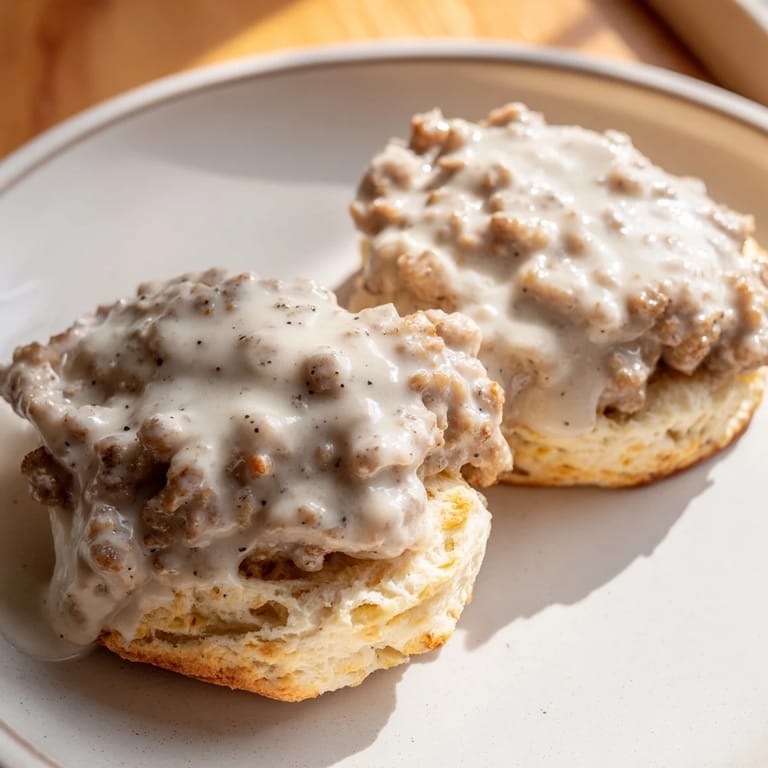
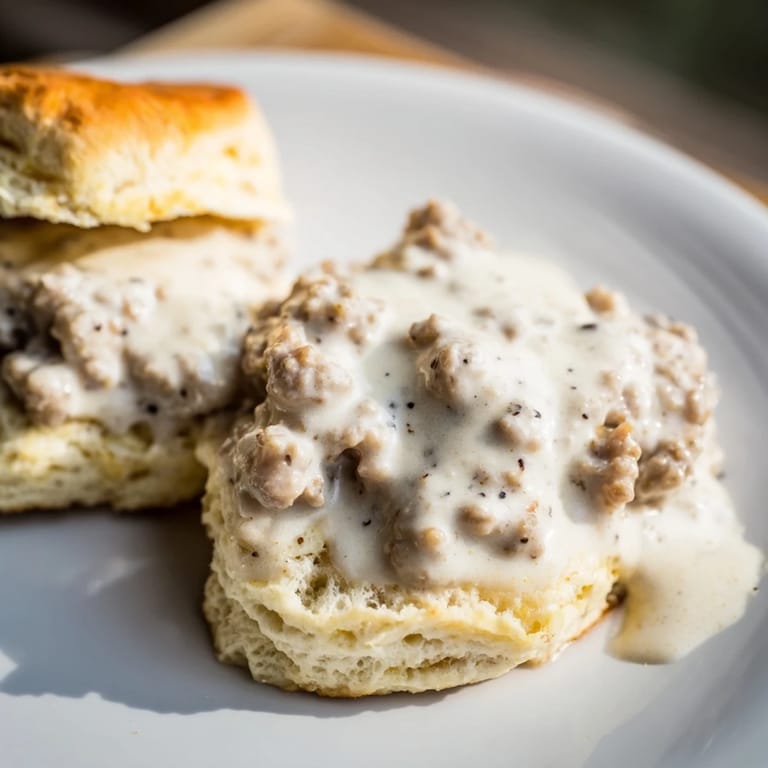
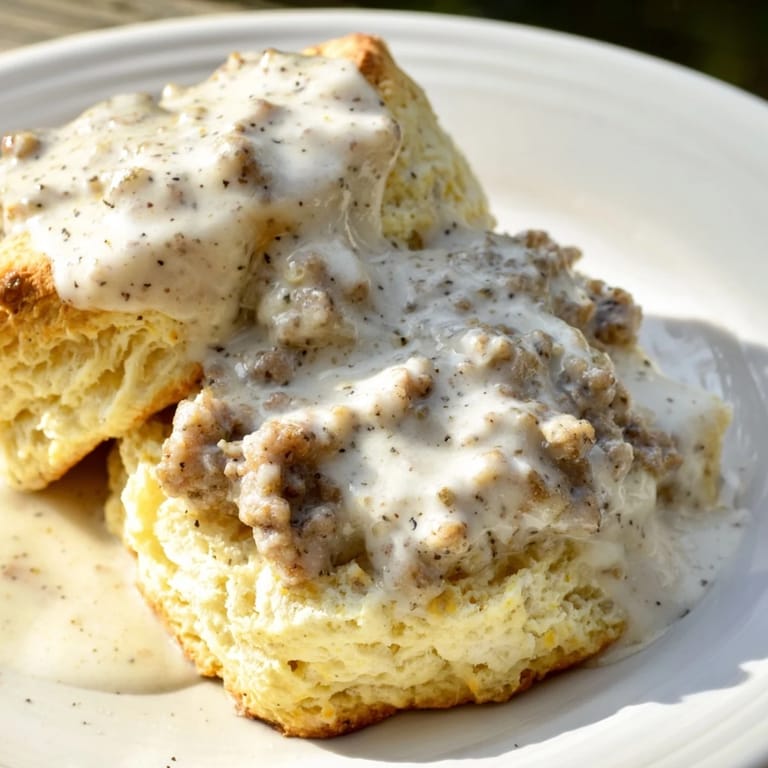
- Split warm biscuits in half and ladle hot gravy over the top generously. Serve immediately while everything is still steaming.
 Save to Pinterest
 I once made this for a friend who was going through a rough week, and watching her face light up when she tasted it made me realize that some recipes are really just love in edible form. It's not fancy, it doesn't require special skills, but it absolutely requires that you care about getting it right.
The Secret to Flaky Biscuits
The difference between a good biscuit and a great one comes down to temperature and restraint. Cold butter creates pockets of fat that steam during baking, creating those delicate flaky layers that fall apart on your tongue. The moment you stop worrying about making the dough perfect and trust it to work is the moment your biscuits become what they're supposed to be. I learned this by making bad biscuits first, which taught me to respect the process instead of fight it.
Sausage Gravy Mastery
The gravy is where technique meets comfort, and the technique is simpler than it seems. Render out the sausage fat, cook the flour in that fat to build flavor, then add milk slowly while whisking constantly. This roux-based gravy is the foundation of hundreds of dishes, so once you master it here, you'll recognize it everywhere. The peppery bite is what keeps it from being heavy—it cuts through the richness and makes you want another bite.
Making This Breakfast Feel Special
Biscuits and gravy is at its best when you slow down and treat it as a moment instead of just a meal. Set the table even if you're eating alone, make fresh coffee, and actually taste what you made. There's something about a warm biscuit smothered in gravy that makes ordinary mornings feel worth waking up for.
- Split the biscuits while they're still warm—they're easier to split and absorb the gravy better.
- If you're feeding a crowd, keep finished biscuits warm in a low oven while you cook the rest, but serve the gravy hot and fresh.
- Leftover biscuits are amazing split and retoasted, but gravy is best served immediately after making it.
 Save to Pinterest
 This recipe is about showing up for yourself or someone else with food that tastes like it came from a place of genuine care. That's the whole point.
Recipe FAQs
- → How do I achieve flaky biscuits?
Use cold butter cut into the flour mixture and avoid overmixing the dough. Folding the dough gently helps create layers for a flaky texture.
- → What kind of sausage is best for the gravy?
Breakfast sausage, mild or spicy, works well. Choose a variety with good fat content to add richness and flavor to the gravy.
- → How can I thicken the sausage gravy properly?
Sprinkle flour over browned sausage and cook briefly before gradually stirring in milk. Simmer gently until the gravy thickens to the desired consistency.
- → Can I make this dish vegetarian?
Yes, by substituting plant-based sausage and plant-based milk, you can create a vegetarian version with similar flavors and textures.
- → What herbs can enhance the flavor of the gravy?
A pinch of dried sage or thyme added to the sausage while cooking adds an herbal note that complements the richness.
- → How should the biscuits be served for best flavor?
Split warm biscuits and generously spoon hot sausage gravy over the top, serving immediately to enjoy optimal texture and flavor.