 Save to Pinterest
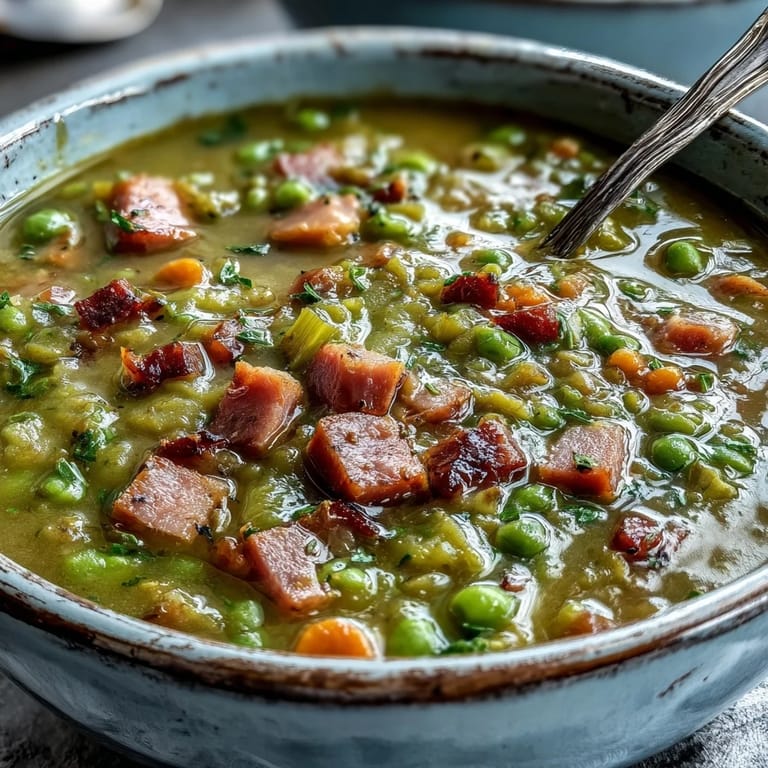
 The first time the air turned crisp enough to see my breath I knew the big green pot was coming out. I used to watch the steam fog up the kitchen windows while the smell of smoked ham drifted into every corner of the house. It was not just about hunger because it was about that specific kind of warmth that starts in your toes. Now I make it whenever the sky looks a bit too gray and heavy. It feels like a hug from the inside out.
I once tried to rush this process by cranking up the heat but the peas stayed stubborn and grainy. My grandmother just laughed and told me that peas are like old friends because they need time to open up. We sat at the kitchen table shelling peanuts while the pot simmered on low for hours. By the time the sun started to set the soup had transformed into something thick and velvety. That afternoon taught me that patience tastes better than any seasoning you can buy.
Ingredients
- Ham bone or diced ham: This provides a deep smoky base that permeates every single pea as they soften.
- Dried split peas: They break down beautifully to create a natural thickener as they cook into a puree.
- Onion carrots and celery: This trio of aromatics forms the flavor foundation for the entire pot of soup.
- Garlic: Just a little bit of minced garlic adds a punch of savory complexity that balances the legumes.
- Chicken or vegetable broth: Using a low sodium version lets you control the final saltiness of the dish perfectly.
- Dried thyme: This herb brings an earthy note that cuts through the richness of the salty ham.
- Bay leaf: It works silently in the background to add a subtle floral depth to the simmering liquid.
- Black pepper: Freshly ground pepper adds a tiny bit of heat to balance the natural sweetness of the carrots.
Tired of Takeout? 🥡
Get 10 meals you can make faster than delivery arrives. Seriously.
One email. No spam. Unsubscribe anytime.
Instructions
- Soften the aromatics:
- Heat your oil in the pot and saute the onion, carrots, and celery until they begin to glisten and turn tender. You will know they are ready when the onion becomes translucent and smells sweet.
- Awaken the garlic:
- Toss in the minced garlic and stir it just long enough to smell that wonderful pungent aroma. Be careful not to let it brown or it might turn the broth bitter.
- Build the base:
- Add your rinsed peas, the ham bone, broth, and water along with your dried herbs to the pot. Give everything a good stir to ensure the peas are not sticking to the bottom.
- Simmer and wait:
- Bring everything to a gentle boil before covering the pot and letting it bubble away on low heat. This slow cooking is what allows the peas to eventually melt into a creamy texture.
- Check the texture:
- Take the lid off for the final thirty minutes so the soup can thicken into its signature hearty consistency. The liquid will reduce slightly and the flavors will become much more concentrated.
- Harvest the meat:
- Pull out the bone and shred any tender bits of ham to stir back into the vibrant green mixture. The meat should fall away from the bone with almost no effort at all.
- Refine the flavor:
- Stir in your salt and pepper after tasting to ensure the balance is exactly how you like it. Remember that the ham is already salty so you might not need much extra.
- Optional blend:
- If you want it extra smooth give it a quick pulse with an immersion blender before serving. Most people prefer a few chunks of vegetable left for a rustic feel.
 Save to Pinterest
 On a particularly snowy Tuesday I shared a big bowl of this with a neighbor who was clearing my driveway. We stood in the garage with steam rising from our mugs not saying much but feeling completely content. It reminded me that a simple pot of soup can be a bridge between people. Food does not always need to be fancy to be deeply meaningful to those who eat it.
Choosing Your Ham
Getting a ham bone with plenty of meat still attached is the real secret to success with this dish. If you do not have a bone a high quality smoked ham hock from the butcher works just as well. The smoky fat renders out and coats the peas in a way that diced ham alone simply cannot match. It adds a layer of history to the broth that feels earned through hours of simmering.
The Perfect Texture
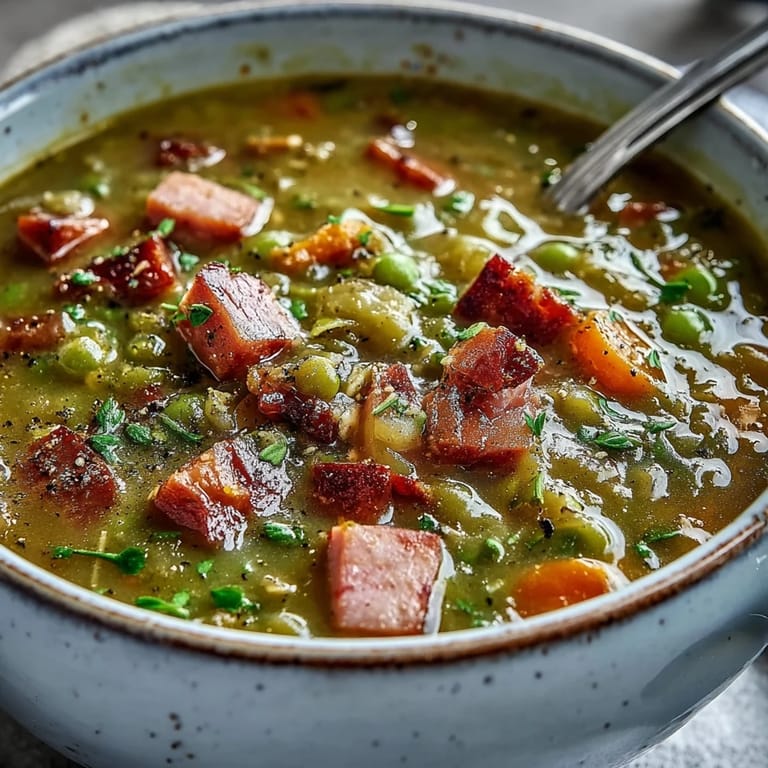
Some people like their split pea soup chunky while others prefer a completely smooth and uniform puree. I find that mashing just a third of the peas against the side of the pot gives you the best of both worlds. It creates a thick and luxurious mouthfeel while still letting you enjoy the bits of tender carrot and ham. It is a small step that makes a massive difference in how the soup feels on the spoon.
Customizing Your Bowl
This recipe is a fantastic canvas for whatever you happen to have left in the vegetable drawer. You can add parsnips for a bit of sweetness or some diced potatoes to make it even more filling. I often finish mine with a squeeze of fresh lemon juice or a splash of vinegar to brighten the heavy flavors.
- Always serve this with a thick slice of buttered sourdough for dipping into the thick soup.
- Add a pinch of smoked paprika if you want an extra layer of campfire flavor in every bite.
- Keep an eye on the liquid levels since the peas soak up broth like a sponge as they cool.
 Save to Pinterest
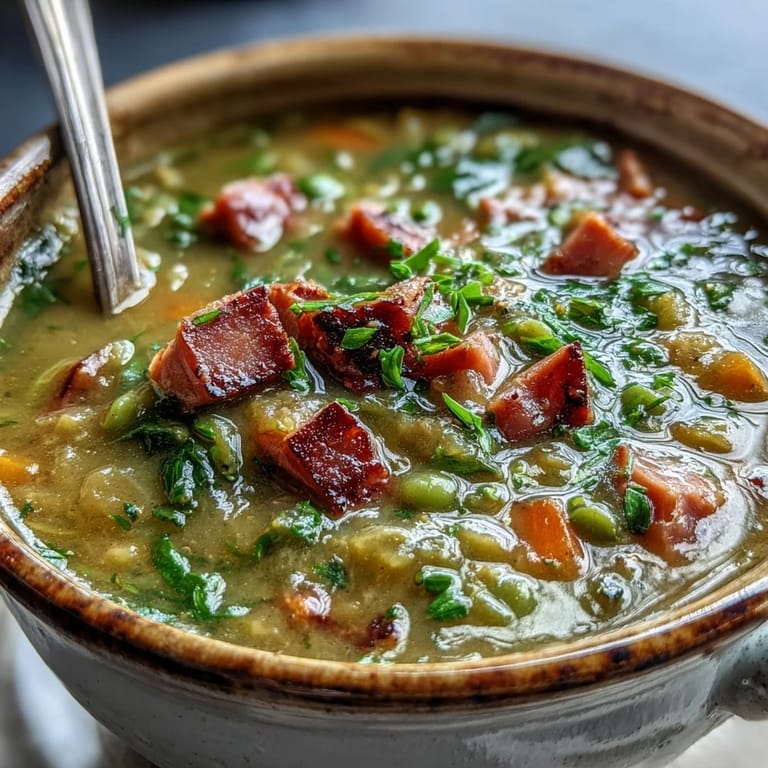
 Ladle this into your favorite heavy bowl and let the warmth settle into your bones. It is the kind of meal that makes the coldest winter night feel cozy and bright.
Recipe FAQs
- → Do I need to soak split peas before cooking?
No, split peas do not require soaking. Unlike dried beans, they cook relatively quickly and break down naturally as they simmer, creating the soup's characteristic thick texture.
- → Can I make this with leftover ham bones?
Absolutely. Ham bones are actually ideal for this soup as they impart incredible depth of flavor. Simply add the bone to the pot while simmering, then remove it before serving and pick off any tender meat to return to the soup.
- → How do I store and reheat leftovers?
This soup keeps beautifully in the refrigerator for up to 4 days or can be frozen for 3 months. Reheat gently on the stovetop, adding a splash of broth or water if needed to thin the consistency.
- → Is there a vegetarian version?
Yes, simply omit the ham bone and use vegetable broth instead of chicken broth. Add smoked paprika or liquid smoke to mimic the smoky depth that ham would provide.
- → Why is my soup too thick or too thin?
The consistency depends on how long the peas simmer and how much liquid evaporates. If too thick, add more broth or water. For a thinner soup from the start, add an extra cup of liquid.
- → Can I make this in a slow cooker?
Yes. Sauté vegetables first, then transfer all ingredients to your slow cooker. Cook on low for 6-8 hours or on high for 3-4 hours until peas are tender.