 Save to Pinterest
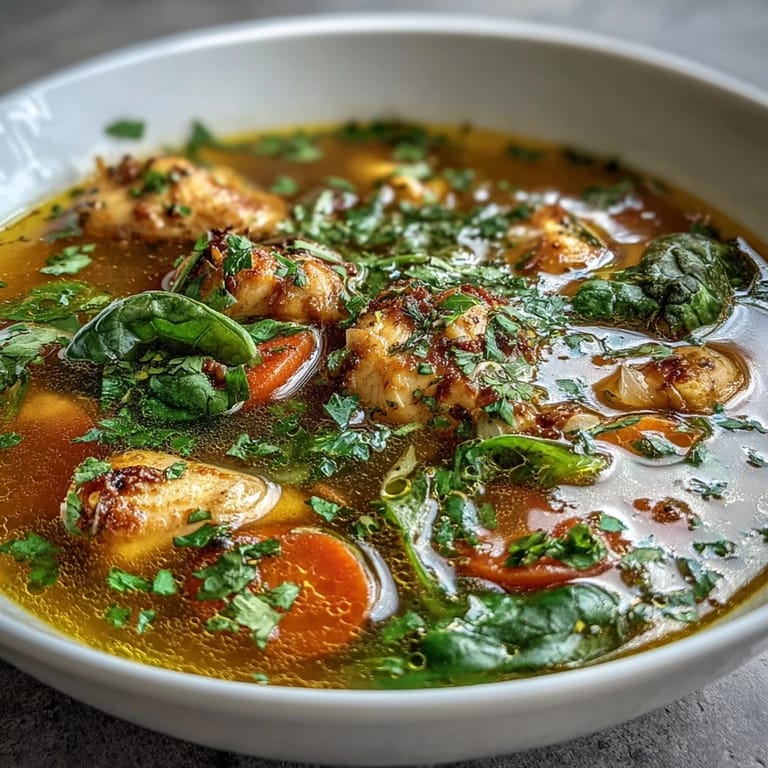
 My neighbor knocked on my door one gray afternoon with a jar of turmeric root and the kind of cough that made me wince. She'd just returned from visiting her sister in Kerala and swore by this golden soup, said it was what her family made when anyone needed mending. I'd never cooked with turmeric before—honestly, I thought it was just for curry—but something about her certainty made me dig into my pantry that evening. The first bowl changed how I think about soup entirely.
Last winter I made this for my sister when she was recovering from the flu, and she actually asked for seconds—which never happens. I remember her sitting at my kitchen counter in an oversized sweater, steam rising from the bowl, and how she closed her eyes after the first spoonful like she'd just been handed something precious. The golden color seemed to matter more than I expected, like it was doing half the healing work before it even touched her lips.
Ingredients
- Boneless, skinless chicken thighs or breasts (500 g / 1.1 lbs), cut into bite-sized pieces: Thighs stay more tender and forgiving, but breasts work if that's what you have—just don't overcook them past the 20-minute simmer.
- Medium onion, finely chopped: This is your flavor foundation; don't rush the sauté or you'll miss that sweet, mellow base that makes everything taste intentional.
- Medium carrots, sliced: They add natural sweetness and break down just enough to give the broth body without falling apart.
- Celery stalks, sliced: The unsung hero that ties everything together—use it even if you're tempted to skip it.
- Garlic cloves (3), minced: Mince it fine so it dissolves into the broth rather than leaving harsh chunks.
- Fresh ginger, peeled and grated (2.5 cm / 1 inch piece): This brings brightness and a subtle heat that balances the turmeric perfectly; fresh ginger makes all the difference.
- Baby spinach or kale leaves (150 g / 1 cup): Added at the very end so it stays vibrant green and doesn't turn that dull, tired color.
- Low-sodium chicken broth (1.5 liters / 6 cups): Quality matters here since it's the backbone of the whole soup—taste it first and adjust salt accordingly.
- Olive oil (1 tbsp): Just enough to coat the pot and start everything sizzling without making the soup heavy.
- Lemon juice (from 1 lemon): The final secret that brightens everything and prevents the soup from tasting one-dimensional.
- Ground turmeric (1½ tsp): The star ingredient that gives the soup its golden color and earthy warmth; don't skip the blooming step or it tastes bitter.
- Ground cumin (½ tsp): Adds depth without overpowering, just enough to make you wonder what it is.
- Ground black pepper (½ tsp): Use freshly ground if you can; it tastes sharper and brighter than pre-ground.
- Sea salt (½ tsp, or to taste): Taste as you go because salt needs adjust based on your broth.
- Crushed red pepper flakes (¼ tsp, optional): Add only if you want heat; it's optional for a reason.
- Fresh parsley or cilantro, chopped (2 tbsp): The garnish that makes it feel finished and intentional, never skip this final step.
Tired of Takeout? 🥡
Get 10 meals you can make faster than delivery arrives. Seriously.
One email. No spam. Unsubscribe anytime.
Instructions
- Get your pot ready and start the base:
- Heat the olive oil in a large soup pot over medium heat. You'll hear a gentle sizzle the moment it hits the pan—that's your signal to add the onion, carrots, and celery and let them soften for about 5 minutes, stirring occasionally so nothing sticks to the bottom.
- Build the aromatics:
- Stir in the minced garlic and grated ginger, cooking for just 1 minute until the kitchen smells like something transformative. This is where you'll notice that shift from raw vegetable smell to something warm and inviting.
- Bloom the spices:
- Add the turmeric, cumin, black pepper, and salt all at once, stirring constantly for about 30 seconds. This short cooking time brings out the spices' true flavors instead of leaving them dusty and one-dimensional in the broth.
- Sauté the chicken:
- Add the chicken pieces and cook for 2–3 minutes, stirring occasionally, until they lose that raw, translucent look. You're not trying to cook them through yet, just seal in their flavor.
- Build the broth:
- Pour in the chicken broth and bring everything to a boil over medium-high heat, then immediately reduce to a gentle simmer. Cover the pot and let it bubble quietly for 20 minutes, which gives the chicken time to cook through completely and the broth time to absorb all those spice and ginger notes.
- Finish with greens:
- Add the spinach or kale and simmer for 5 more minutes until the leaves have wilted into the broth. Peek at the chicken to make sure it's cooked through—it should shred easily with a spoon.
- Brighten and taste:
- Stir in the lemon juice, then taste the soup and adjust the salt or pepper if it needs it. The lemon is crucial here; it wakes up all the flavors and prevents the soup from tasting flat or one-note.
- Serve with intention:
- Ladle the soup into bowls and finish each one with a handful of fresh parsley or cilantro. Serve hot, and if you want to make it heartier, a crusty piece of bread on the side transforms it into something almost stew-like.
 Save to Pinterest
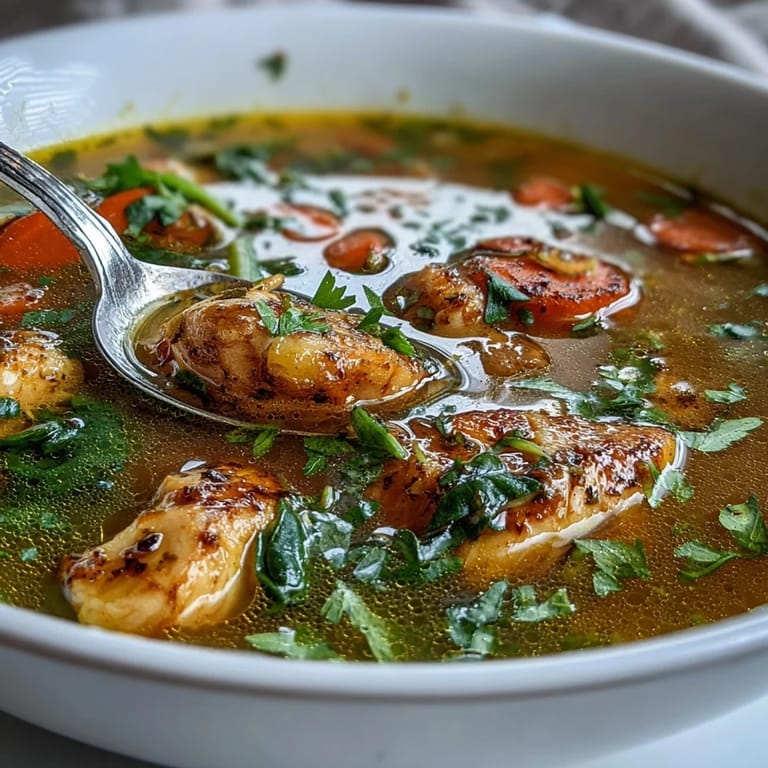
 There's this moment when someone tastes this soup for the first time and their shoulders relax—actually relax, like they've just been handed permission to feel better. That's when I know I've made it right.
Variations That Actually Work
The beauty of this soup is how forgiving it is with substitutions. I've swapped the chicken for chickpeas on evenings when I'm cooking vegetarian, and honestly, nobody misses the meat—just use vegetable broth instead and add a splash of coconut milk for richness. If you want it heartier, stir in some cooked rice or quinoa in the last few minutes; I learned this trick from a food blogger but immediately forgot about her and claimed it as my own discovery.
The Secret To Better Flavor
One night I absentmindedly tossed a cinnamon stick and a star anise into the pot while the soup simmered, just because they were sitting on my counter. The result was subtle and almost invisible until I tried a version without them—suddenly the soup felt flat, like someone had turned down the volume. Now I always add them, simmer for the full 20 minutes, then fish them out before serving. This isn't a required step, but it's the kind of thing that transforms good soup into the kind people ask you to make again.
Storage & Make Ahead Tips
This soup actually tastes better the next day when all the flavors have had time to meld and deepen. I've learned to make a double batch on lazy Sunday afternoons and portion it into glass containers that live in my fridge for three days of easy lunches. It also freezes beautifully for up to three months, though I always add the fresh herbs after reheating so they don't taste tired and sad.
- Refrigerate in airtight containers for up to 3 days, or freeze for up to 3 months.
- Reheat gently over medium heat on the stovetop to preserve the fresh, vibrant flavor.
- Add fresh herbs right before serving, never before freezing, so they stay bright and alive.
 Save to Pinterest
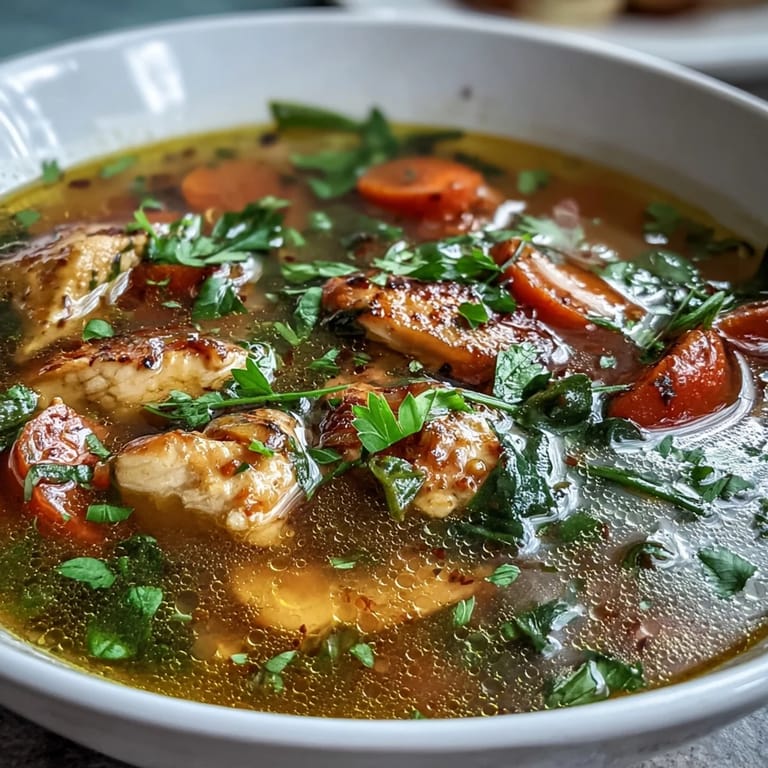
 This soup taught me that the most nourishing meals are often the simplest ones, the ones that smell golden before they even touch your lips. Make it for someone you love, or just make it for yourself on a day when you need reminding that warmth and care can come from a single pot.
Recipe FAQs
- → What makes this soup golden?
The vibrant golden color comes from ground turmeric, which also provides anti-inflammatory benefits and earthy warmth to every bowl.
- → Can I make this soup vegetarian?
Absolutely. Substitute chicken with chickpeas and use vegetable broth instead of chicken broth for a delicious plant-based version.
- → How long does this soup keep?
Store in an airtight container in the refrigerator for up to 4 days. The flavors actually develop and improve over time.
- → Can I freeze this soup?
Yes, freeze for up to 3 months. For best results, add fresh spinach when reheating rather than freezing it with the soup.
- → What can I serve with this soup?
Pair with warm crusty bread, naan, or a simple side salad. For extra heartiness, add cooked rice or quinoa directly to the bowl.
- → Is this soup spicy?
The red pepper flakes are optional, so you control the heat. Without them, the soup is gently warmed by aromatic spices rather than spicy.