 Save to Pinterest
 There's something about the first brunch invitation where you're asked to bring a dish that makes you want to show up with something that feels genuinely impressive. I spent that Saturday morning learning to poach eggs properly, mostly failing, and then discovering that the secret wasn't technique at all—it was just accepting the gentle chaos of it. Now whenever I make Eggs Benedict, I'm back in that kitchen, watching the water swirl, feeling that small rush when each egg slides in perfectly.
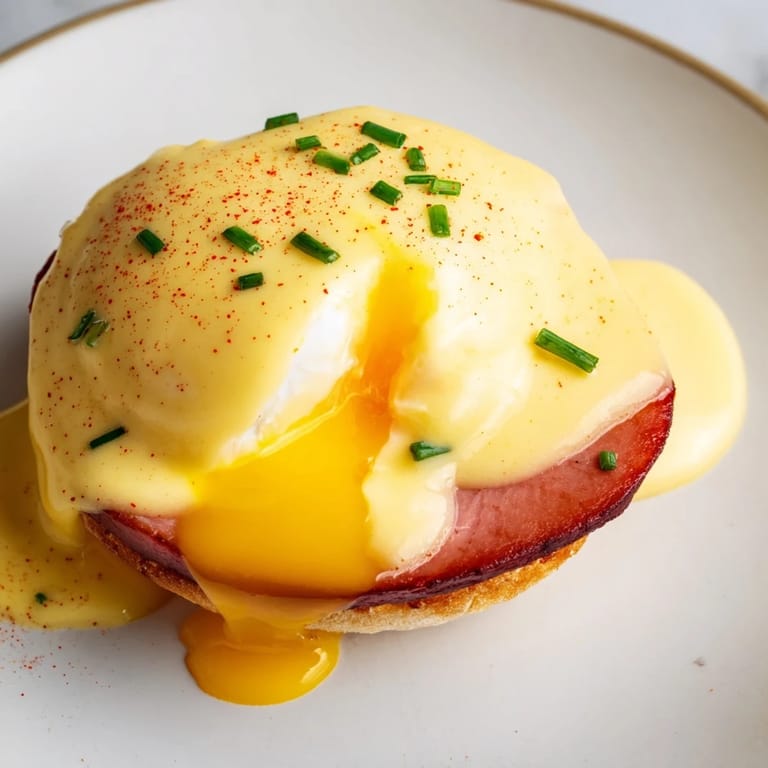
I made this for my dad on a random Tuesday morning when he mentioned craving something restaurant-quality but at home. Watching him cut into that poached egg and see the yolk spill across the muffin—that's when I realized cooking isn't about impressing people, it's about these small moments that make someone feel seen.
Ingredients
- Egg yolks (3 large): The foundation of hollandaise; they'll transform into silk with patience and constant whisking.
- Lemon juice (1 tablespoon, freshly squeezed): This keeps the sauce from feeling heavy and adds brightness that bottled juice never quite manages.
- Unsalted butter (1/2 cup, melted and warm): Temperature matters more than you'd think—cold butter seizes the sauce, too hot and it breaks into regret.
- Dijon mustard (1/2 teaspoon, optional): Just enough to wake up your palate without announcing itself.
- Cayenne pepper (pinch): A whisper of heat that makes people wonder what that flavor is.
- Salt, to taste: Added at the end because butter is salty and yolks are forgiving.
- Large eggs (4): Fresh eggs poach cleaner than older ones; if they're loose, accept it and move on.
- English muffins (2, split and toasted): The nooks and crannies catch hollandaise like tiny golden cups.
- Canadian bacon (4 slices): A gentle alternative to ham, salty enough to anchor the richness above it.
- White vinegar (1 tablespoon): Added to the poaching water to help eggs set without curdling; plain vinegar works better than fancy varieties here.
- Butter for toasting (optional): Toast the muffins dry or with a kiss of butter depending on your mood.
- Chives or parsley for garnish (optional): A green note that says you cared enough to finish what you started.
Tired of Takeout? 🥡
Get 10 meals you can make faster than delivery arrives. Seriously.
One email. No spam. Unsubscribe anytime.
Instructions
- Build your hollandaise foundation:
- Set a heatproof bowl over gently simmering water, making sure the bottom doesn't touch the water. Whisk together egg yolks and lemon juice until they pale and roughly double in volume—this takes about 2 minutes and your arm will remember it.
- Introduce the butter slowly:
- Drizzle warm melted butter in while whisking constantly, as if you're having a conversation with the sauce rather than commanding it. The moment it starts looking creamy and thick, stop adding butter and whisk in your mustard, cayenne, and salt to taste.
- Toast your foundation:
- If your muffins are day-old, they need the extra attention—butter them lightly and toast until the edges are crispy and the insides still have some give. Fresh muffins just need color.
- Warm the Canadian bacon:
- A quick sear in a skillet over medium heat, about a minute per side, is all this needs to go from cold slice to ready. It shouldn't brown aggressively, just warm through and hint at caramelization.
- Poach with intention:
- Bring 2–3 inches of water and vinegar to a gentle simmer, not a rolling boil. Crack each egg into a small bowl first, swirl the water to create a whirlpool, and slide one egg in at a time—this keeps them from spreading into sad clouds.
- Know when they're ready:
- After about 3–4 minutes, the whites should be completely set but the yolk will jiggle slightly when you gently press it with the slotted spoon. That's your signal to lift them out.
- Assemble with care:
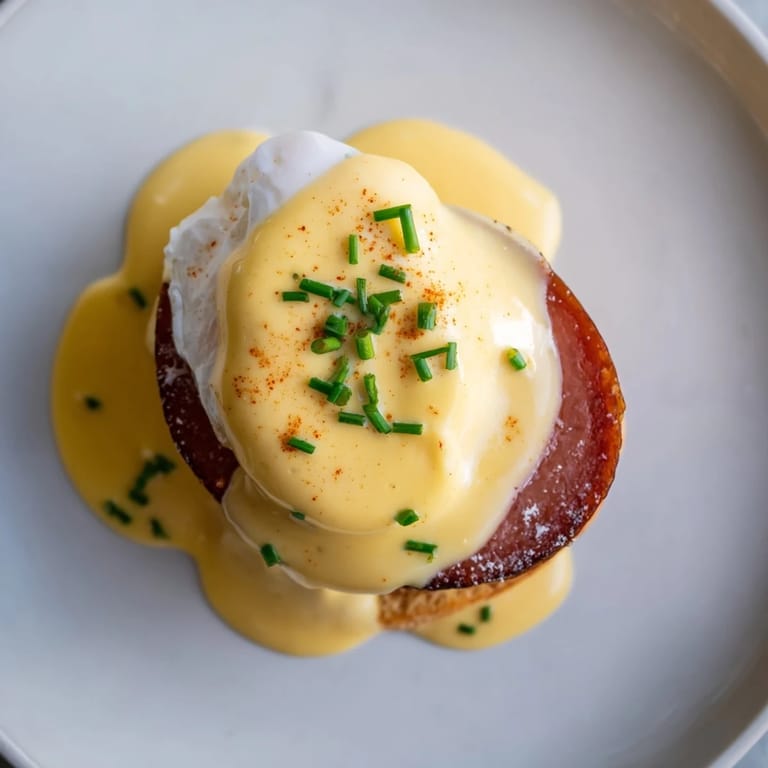
- Place a warm muffin half on each plate, top with Canadian bacon, then the poached egg, and finish with a generous spoon of hollandaise. The heat from each layer helps everything meld together.
 Save to Pinterest
 There's a reason brunch became its own meal—it's when cooking feels less like obligation and more like celebration. Sitting at a table with someone eating something you made, watching their face when that yolk breaks, knowing that you brought that moment into being—that's what Eggs Benedict is really about.
The Hollandaise Moment
The first time I made hollandaise from scratch, I was convinced I'd discovered something secret and complicated. Now I understand it's just emulsion—egg yolks holding butter and lemon juice in suspension through constant motion. Once you feel that shift from loose and tangy to thick and golden, you stop being nervous about it. It's less magic trick and more muscle memory.
Timing Is Everything
The trickiest part isn't any single step—it's having everything ready at the same moment. Your hollandaise needs to stay warm but not hot, your muffins toasted, your bacon cooked, and your eggs poaching exactly when you're about to plate. I learned this by doing it wrong three times, making too much sauce too early, and scrambling to keep it from breaking. Now I work backwards: poach the eggs first because they take exactly the time I need to get everything else warm.
Make It Yours
The beauty of Eggs Benedict is how it welcomes substitution without losing itself. Some mornings I use smoked salmon instead of Canadian bacon, remembering that version as the Royale. Other times I'll wilt spinach underneath everything and call it Florentine. The structure stays the same—it's just the details shifting.
- A pinch of fresh tarragon whisked into the hollandaise transforms the entire flavor in ways that surprise you.
- If you're making this for vegetarians, sautéed mushrooms or fresh avocado slides into Canadian bacon's spot without apology.
- Keep everything warm on a low oven while you finish plating—brunch deserves to stay hot from first bite to last.
 Save to Pinterest
 Eggs Benedict lives in that space between simple and sophisticated, which is why it's so satisfying to make. You're not performing for anyone—you're just bringing together a few good ingredients and some patience.
Recipe FAQs
- → How do I poach eggs perfectly?
Use simmering water with a splash of vinegar to help the whites set quickly. Crack eggs individually into a bowl, then gently slide into a vortex of simmering water and poach for 3-4 minutes until whites are firm but yolks remain runny.
- → What is the best way to make hollandaise sauce?
Whisk egg yolks and lemon juice over a double boiler until thickened. Gradually add melted butter while whisking constantly to create a smooth, creamy sauce. Season with mustard, cayenne, and salt to taste.
- → Can I substitute Canadian bacon with something else?
Yes, smoked salmon or sautéed spinach work well as substitutions, offering pescatarian or vegetarian alternatives while preserving rich flavors.
- → How do I keep the hollandaise sauce from curdling?
Keep the sauce warm but not hot by removing it from heat promptly after preparation. Whisk occasionally to maintain smoothness and prevent separation.
- → What are good serving suggestions for this dish?
Pair with sparkling wine or a light-bodied white wine, and garnish with fresh chives or parsley for added aroma and color. Serving immediately ensures the best texture and flavor.