 Save to Pinterest
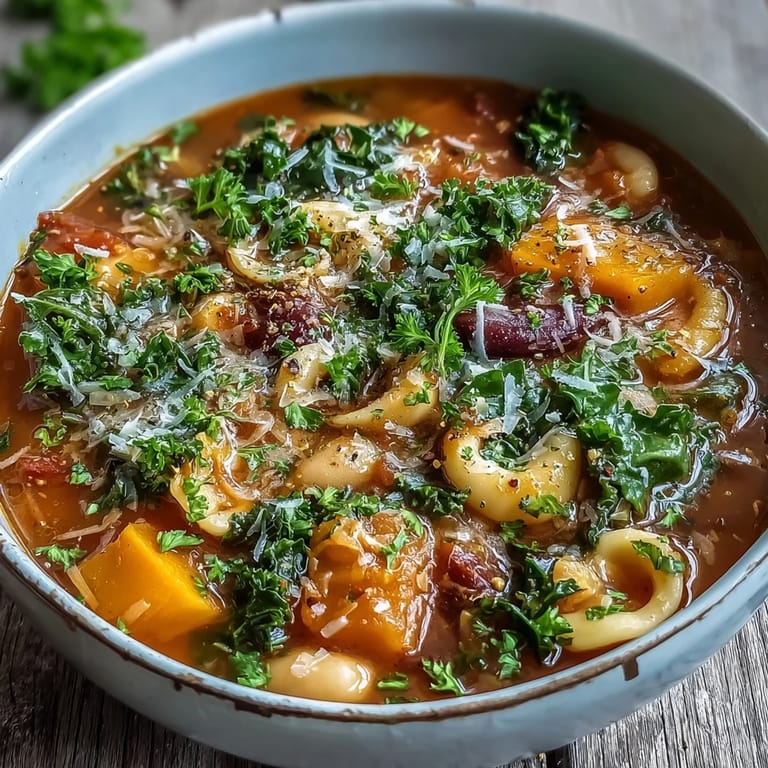
 The windows had frosted over completely that January, the kind of cold that makes you want to live in sweats and wool socks. My friend texted at noon, slightly desperate, saying she'd just attempted minestrone from some fancy cookbook and ended up with something that tasted like dishwater. I invited her over, put a pot on to warm, and we spent the afternoon tinkering with vegetables until the kitchen smelled like garlic and comfort. That version became our winter standard, the one we still make when the thermometer drops below freezing.
Last February, my sister called me in tears over something ridiculous at work, so I told her to come over immediately. I doubled this recipe, and we sat at my kitchen island for three hours picking out the pasta shapes first, then the chunks of squash, then arguing over who got more kale. By the time she left, her problems hadn't magically vanished, but she was full and warm enough to face them again.
Ingredients
- 2 tablespoons olive oil: Use a good one here since it forms the flavor foundation with the vegetables
- 1 medium yellow onion, diced: Yellow onions have the right sweetness that mellow beautifully as they cook down
- 2 medium carrots, peeled and diced: They add subtle sweetness and that classic soup depth you expect from minestrone
- 2 celery stalks, diced: Essential for the aromatic base that makes this taste like it simmered all day
- 3 garlic cloves, minced: Dont be shy here garlic becomes milder and sweeter as it cooks in the broth
- 1 small butternut squash, peeled and diced: The real star that holds its shape while becoming fork tender
- 1 medium zucchini, diced: Adds fresh texture that prevents the soup from feeling too heavy
- 1 cup chopped fresh kale, stems removed: Stems make the soup bitter and tough, so take the extra minute to remove them
- 1 (14.5 ounce) can diced tomatoes with juices: The juices are crucial for body so dont drain them
- 1 (15 ounce) can cannellini beans, drained and rinsed: Creamy and mild, they become little protein pillows in the broth
- ½ cup small pasta: Ditalini or elbow macaroni work perfectly, anything tiny enough to fit on a spoon
- 6 cups vegetable broth: Use a low sodium brand so you can control the salt level yourself
- 1 cup water: Keeps the broth from becoming too intense as it reduces
- 1 teaspoon dried oregano: Dried herbs actually work better here since they'll cook long enough to rehydrate fully
- 1 teaspoon dried thyme: Adds an earthy undertone that pairs beautifully with the squash
- ½ teaspoon dried rosemary: A little goes a long way, too much can taste medicinal
- ¼ teaspoon crushed red pepper flakes: Just a whisper of heat that makes all the other flavors pop
- Salt and black pepper: Taste at the end, broth brands vary wildly in sodium content
- 2 tablespoons chopped fresh parsley: Adds a bright fresh finish that cuts through the rich tomato base
- Grated Parmesan cheese: Optional but highly recommended for that salty umami finish
Tired of Takeout? 🥡
Get 10 meals you can make faster than delivery arrives. Seriously.
One email. No spam. Unsubscribe anytime.
Instructions
- Build your flavor foundation:
- Heat olive oil in a large pot over medium heat, then add onion, carrots, and celery. Sauté for 5 to 6 minutes until softened and fragrant, stirring occasionally so nothing sticks.
- Wake up the garlic:
- Stir in minced garlic and cook for just 1 minute until you can smell it. Watch carefully since garlic turns bitter quickly once it starts browning.
- Add the hard vegetables:
- Add butternut squash and zucchini, cooking for 4 to 5 minutes. This brief head start helps them begin softening before they hit the liquid.
- Create the broth:
- Pour in diced tomatoes with their juices, vegetable broth, and water. Bring everything to a gentle boil, letting the tomatoes break down slightly.
- Infuse with herbs:
- Stir in oregano, thyme, rosemary, and red pepper flakes. Reduce heat to maintain a steady simmer and cook uncovered for 15 minutes to let flavors meld.
- Add the pasta and beans:
- Stir in cannellini beans and pasta. Simmer for another 8 to 10 minutes until both are tender, checking pasta texture since small shapes cook faster than you think.
- Wilt the kale:
- Stir in chopped kale and cook for 2 to 3 minutes until it wilts completely. Taste the broth and adjust salt and pepper as needed.
- Finish with fresh herbs:
- Remove from heat and stir in fresh parsley. Let everything rest for a few minutes so the broth thickens slightly.
- Serve and enjoy:
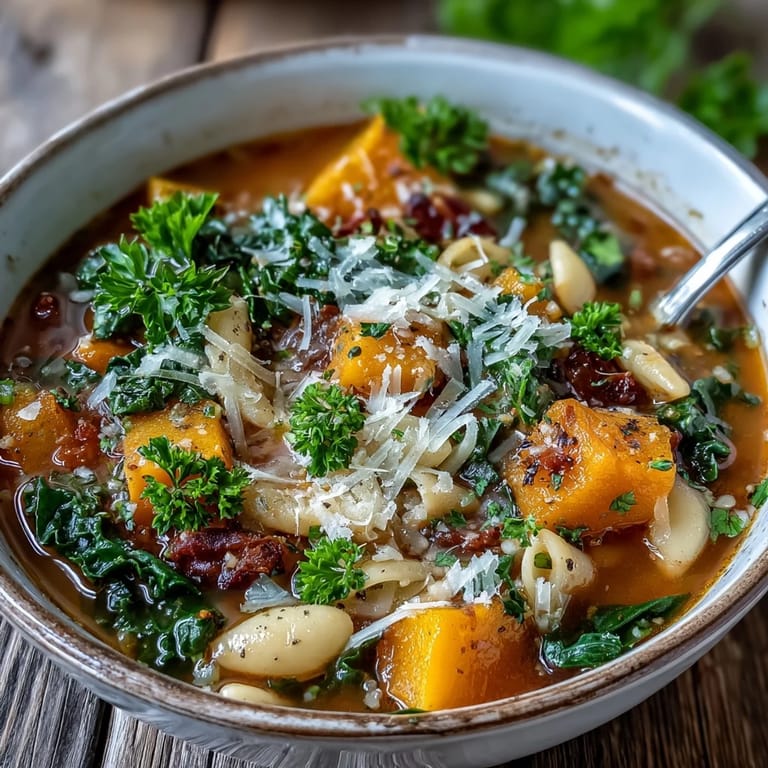
- Ladle into bowls and top generously with grated Parmesan. The cheese will melt into hot spots creating little salty pockets throughout.
 Save to Pinterest
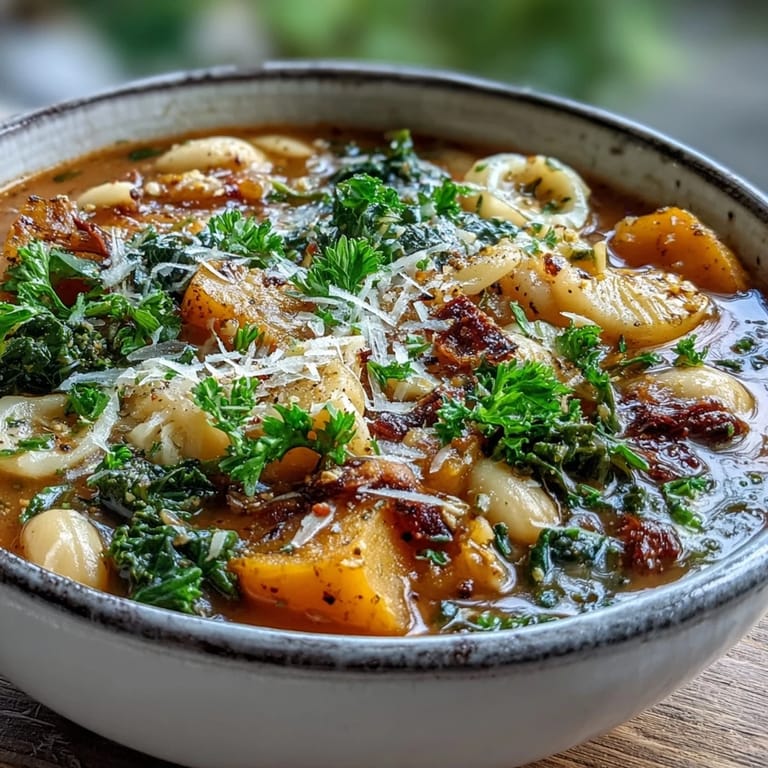
 My roommate sophomore year came from a family that made minestrone every Sunday, and she'd shake her head at my shortcut versions until the day I made this one. She took one sip, went quiet for a long minute, then asked for the recipe. Now she makes it for her family and claims it was her grandmothers all along.
Making It Your Own
The beauty of minestrone lies in its flexibility. Swap kidney beans or chickpeas for the cannellini if that's what lives in your pantry. Use spinach instead of kale when winter greens feel too intense. I've made this with frozen squash in a pinch, and while fresh is undeniably better, nobody at my table complained on a busy Tuesday.
Perfecting The Texture
Some people love their minestrone thick enough to stand a spoon in, while others prefer something closer to a traditional soup. Control this by adjusting the water amount or letting it simmer uncovered longer for concentration. The starch from pasta naturally thickens things as it cooks, so start checking texture five minutes before the pasta is done.
Serving Suggestions
This soup demands something crusty for dunking, preferably bread substantial enough to hold up when dragged through that rich tomato broth. A crisp white wine like Pinot Grigio cuts through the heaviness beautifully, but honestly, sometimes I just want cold water and more Parmesan.
- Let leftovers sit overnight in the refrigerator the flavors develop and marry in ways that make it taste even better the next day
- Freeze individual portions in freezer safe containers for those nights when cooking feels impossible
- If reheating, add a splash of water or broth since the pasta will have drunk quite a bit overnight
 Save to Pinterest
 There's something deeply satisfying about making something this nourishing from ingredients you probably already have. Hope this finds its way into your winter rotation.
Recipe FAQs
- → Can I make this minestrone ahead of time?
Absolutely. This soup actually tastes better the next day as flavors have time to meld. Store in the refrigerator for up to 4 days. The pasta may absorb more liquid, so add extra broth when reheating if needed.
- → What pasta works best in minestrone?
Small shapes like ditalini, elbow macaroni, or small shells are ideal because they spoon up easily with the vegetables and beans. Any small pasta will work beautifully in this hearty soup.
- → Can I freeze winter minestrone?
Yes, though it's best to freeze without the pasta, as it can become mushy. Cook the pasta fresh when reheating, or freeze the complete soup and accept slightly softer pasta texture. Freezes well for up to 3 months.
- → How do I make this vegan?
Simply omit the Parmesan cheese garnish or use a dairy-free alternative. The rest of the soup is naturally plant-based, relying on vegetables, beans, and pasta for a satisfying, protein-rich meal.
- → What can I substitute for butternut squash?
Acorn squash, delicata squash, or sweet potato work wonderfully as alternatives. They offer similar sweetness and hold their shape well during simmering. Cut them into similar-sized pieces for even cooking.
- → Is there a way to add more protein?
Stir in a cup of frozen green peas or chopped spinach near the end. You could also add shredded chicken or sausage during the last 10 minutes if you eat meat. The cannellini beans already provide 7 grams of protein per serving.