 Save to Pinterest
 The first snowfall had just started dusting the windowsills when my grandmother called, asking if I had any butternut squash left from the farmers market. She insisted that minestrone needed that sweetness to balance the bitter winter greens, and after tasting her version that afternoon, I finally understood why she was so particular about it.
Last January, my neighbor came over shivering from a walk in the cold, and I made a double batch of this soup. We sat at the kitchen table with steam rising from our bowls, and she told me it was exactly what her Italian grandmother used to make when she was little, which felt like the highest compliment I could have received.
Ingredients
- 2 tablespoons olive oil: Creates the foundational flavor base for sautéing the vegetables
- 1 medium yellow onion, diced: Provides sweet aromatic depth that mellows as it cooks
- 2 carrots, sliced: Adds natural sweetness and beautiful color to the broth
- 2 celery stalks, sliced: Brings essential savory notes and subtle crunch
- 3 garlic cloves, minced: Infuses the oil with aromatic warmth right at the start
- 3 cups butternut squash, peeled and cubed: The star ingredient that sweetens the soup as it simmers tender
- 1 medium zucchini, diced: Adds fresh texture and soaks up the herb flavors
- 1 can (14 oz/400 g) diced tomatoes: Provides body, acidity, and rich tomato flavor
- 4 cups kale, stems removed and leaves chopped: Holds up beautifully in hot broth and adds nutrition
- 1 can (15 oz/425 g) cannellini beans, drained and rinsed: Creamy protein that makes the soup satisfying
- 1 cup small pasta: Traditional addition that makes it hearty enough for a full meal
- 6 cups vegetable broth: The flavorful liquid base that brings everything together
- 1 bay leaf: Subtle background herb flavor that elevates the entire soup
- 1 teaspoon dried oregano: Classic Italian herb that pairs perfectly with tomatoes
- 1 teaspoon dried thyme: Earthy and aromatic, complements the squash beautifully
- 1/2 teaspoon dried rosemary: Piney fragrance that makes the kitchen smell incredible
- Salt and pepper, to taste: Essential for bringing all flavors forward
Tired of Takeout? 🥡
Get 10 meals you can make faster than delivery arrives. Seriously.
One email. No spam. Unsubscribe anytime.
Instructions
- Build your aromatic base:
- Heat olive oil in a large pot over medium heat, then add onion, carrots, and celery, sautéing for 5 minutes until softened and fragrant.
- Wake up the garlic:
- Stir in minced garlic and cook for just 1 minute until it becomes aromatic, being careful not to let it brown.
- Add the hard vegetables:
- Toss in butternut squash and zucchini, cooking for another 5 minutes and stirring occasionally to start developing their flavors.
- Create the soup base:
- Pour in diced tomatoes, vegetable broth, bay leaf, oregano, thyme, and rosemary, then bring everything to a gentle boil.
- Simmer to develop flavor:
- Reduce heat to low, cover the pot, and let it simmer for 15 minutes until the squash is just tender when pierced with a fork.
- Add the heartier ingredients:
- Stir in beans, pasta, and kale, then simmer uncovered for 10 to 12 minutes until pasta is cooked through and kale has wilted nicely.
- Finish and season:
- Remove and discard the bay leaf, then taste the soup and add salt and pepper until all flavors pop.
- Serve with love:
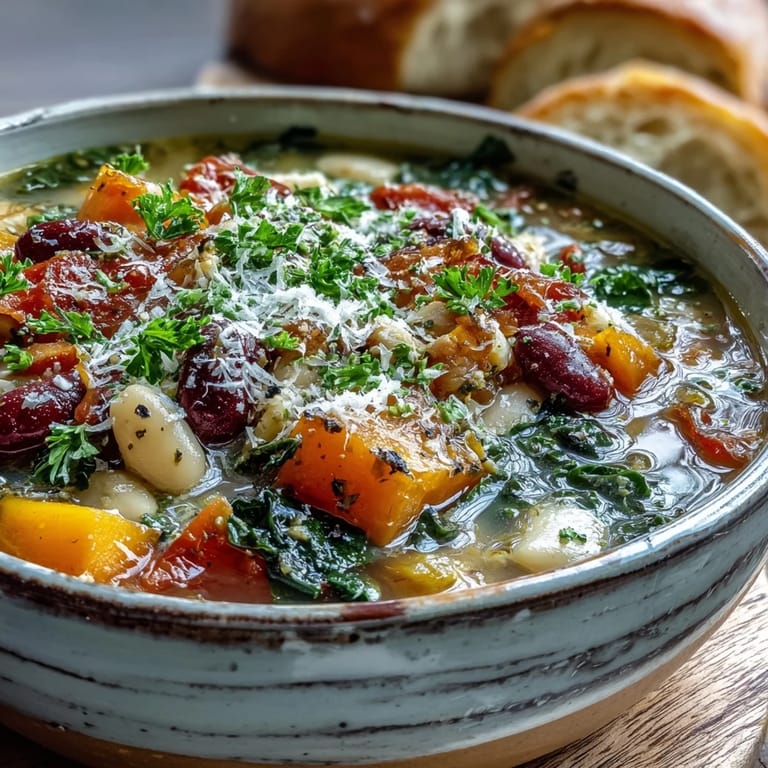
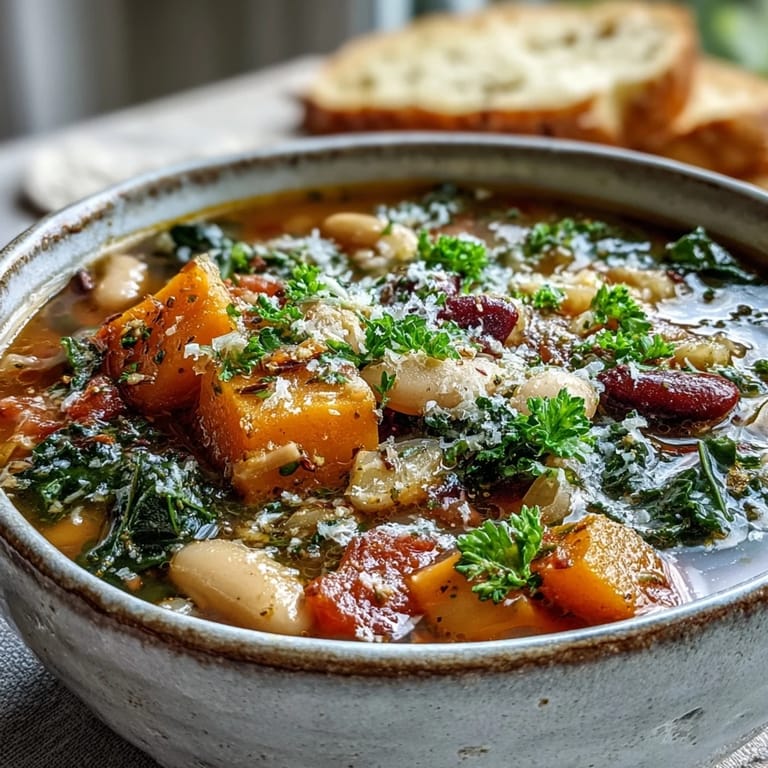
- Ladle the hot soup into bowls and top with grated Parmesan, fresh parsley, and serve alongside crusty bread for soaking up every drop.
 Save to Pinterest
 My friend who swore she hated kale tried this soup and asked for seconds, then thirds, finally admitting she had been eating around kale her whole life because no one ever cooked it properly in a flavorful broth like this.
Making It Your Own
Sometimes I swap in spinach when kale feels too hearty, and other times I add a can of kidney beans along with the cannellini beans for extra protein and texture variation.
The Perfect Bread Pairing
A crusty sourdough or rosemary focaccia transforms this into a complete meal, and I always toast extra slices because everyone inevitably asks for seconds to dunk in their broth.
Batch Cooking Wisdom
This soup actually tastes better the next day after the flavors have had time to marry and deepen, which is why I always make a double batch and portion it into glass containers for easy lunches throughout the week.
- Cook the pasta separately if planning to freeze portions, then add it when reheating
- The soup keeps beautifully in the refrigerator for up to five days
- Freeze without pasta for up to three months, then cook fresh pasta when serving
 Save to Pinterest
 There is something deeply comforting about a pot of soup simmering on the stove, filling the entire house with warmth and the promise of a nourishing meal.
Recipe FAQs
- → Can I make this soup ahead of time?
Yes, this soup actually tastes better the next day as flavors meld. Store in the refrigerator for up to 4 days. Add pasta when reheating to prevent it from becoming mushy.
- → What pasta works best in minestrone?
Small shapes like ditalini, elbow macaroni, or shells work beautifully. They catch the broth and vegetables in each spoonful. Any small pasta you have on hand will suffice.
- → How do I make this gluten-free?
Simply substitute gluten-free pasta or increase the beans and vegetables. The soup remains just as satisfying and flavorful without the wheat.
- → Can I freeze this minestrone?
Freeze without the pasta for best results. Add freshly cooked pasta when reheating. Properly stored, it keeps well in the freezer for 3 months.
- → What vegetables can I substitute?
Swap spinach or chard for kale. Use sweet potatoes instead of butternut squash. Green beans, peas, or diced potatoes all work wonderfully in this flexible soup.
- → How can I add more protein?
Increase to two cans of beans, or add shredded chicken during the last 5 minutes of cooking. A dollop of pesto before serving also adds richness and flavor.