 Save to Pinterest
 The first time I made minestrone, my tiny apartment smelled like an Italian grandmother had moved in. I was experimenting with whatever vegetables I had in my crisper drawer, trying to recreate something I had at a little trattoria in college. The soup was good, but it was even better the next day when the flavors had really melded together in the fridge. Now I make a massive batch every Sunday just to have those leftovers for lunch.
Last winter, my friend came over after a terrible breakup and I made this soup while we talked. She sat at my counter with a glass of wine, watching me chop vegetables and complaining about everything. When we finally sat down to eat, she took one bite and actually started crying. She said it tasted like something her mother used to make when she was sick. We ate the entire pot between the two of us.
Ingredients
- Olive oil: The foundation of the whole soup, use something you actually like the taste of
- Onion, carrots, celery: This classic trio creates the aromatic base that makes everything taste like home
- Garlic: Add it when the other vegetables are already soft so it does not burn and turn bitter
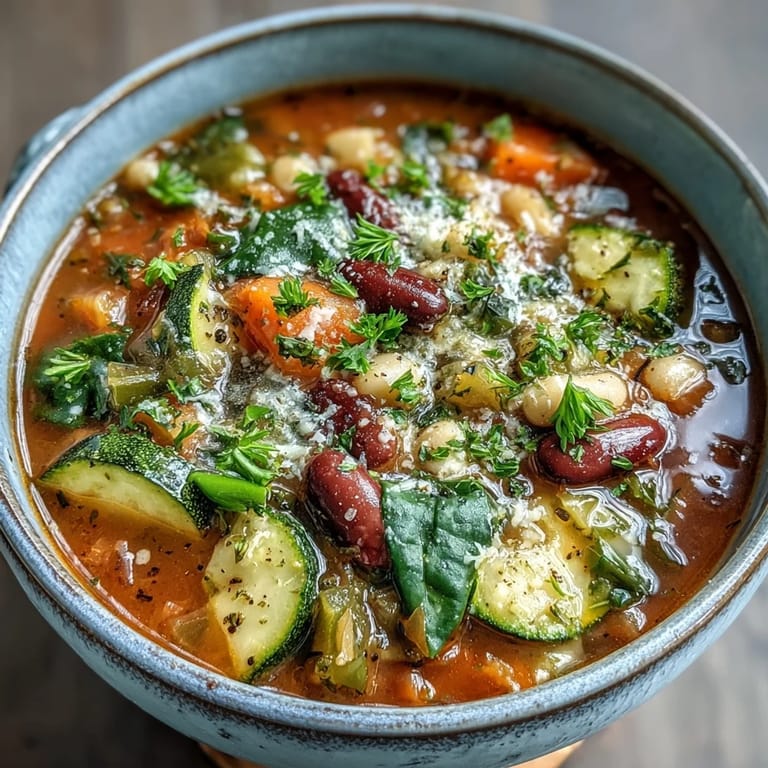
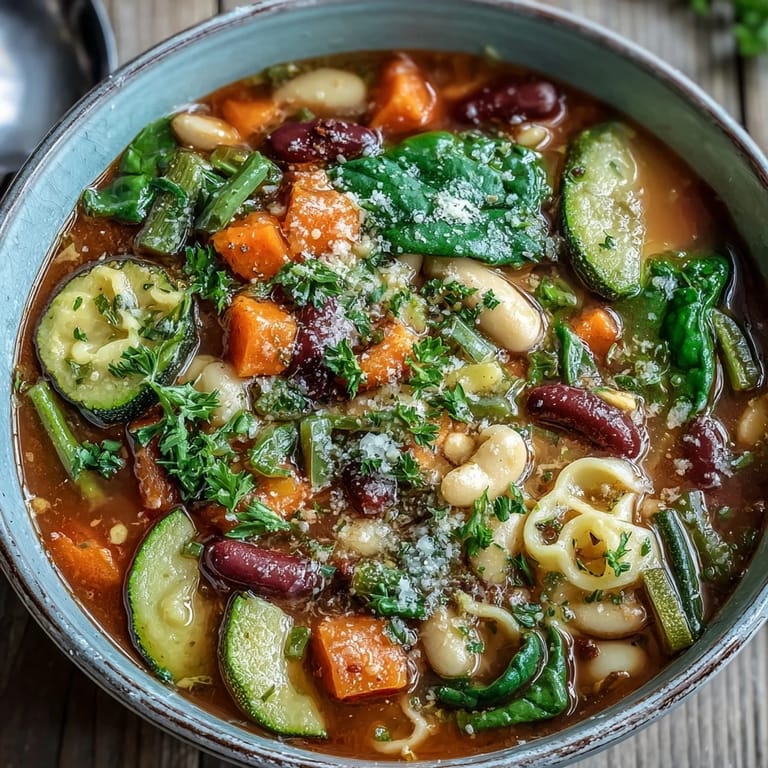
- Zucchini and green beans: These hold their shape beautifully and add different textures to every spoonful
- Spinach or kale: Stir it in at the very end so it stays vibrant and does not get mushy
- Diced tomatoes: The acidity balances the sweetness of the vegetables and creates that gorgeous red broth
- Vegetable broth: Use a good quality one or make your own, it really does make a difference
- Dried oregano, basil, thyme: These Mediterranean herbs scream Italian comfort food
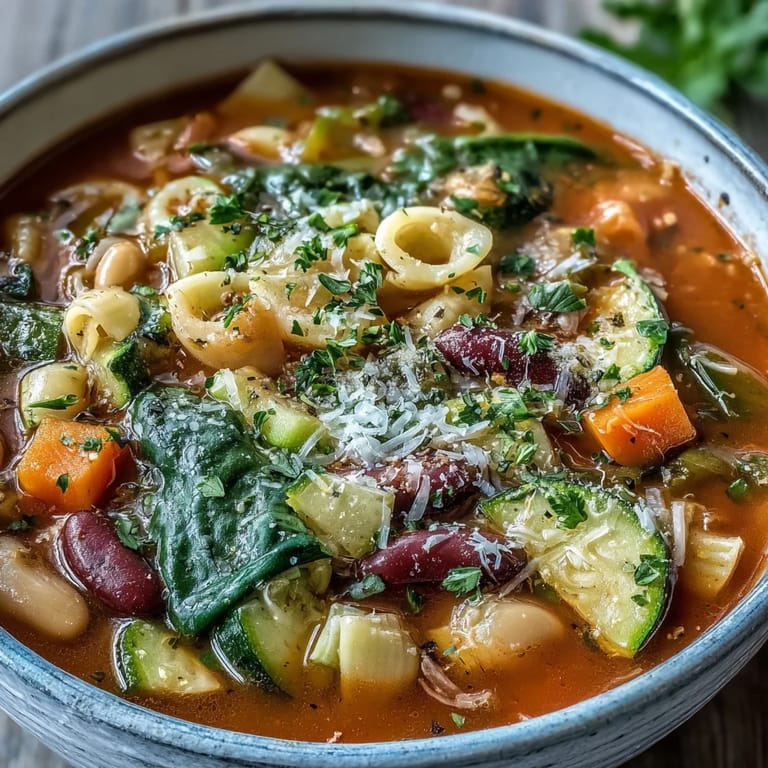
- Small pasta: Choose something that will sit on your spoon, not slide off into the broth
- Cannellini and kidney beans: Two kinds of beans make the soup feel substantial and protein-rich
- Parmesan and fresh parsley: These toppings transform a simple bowl into something restaurant-worthy
Tired of Takeout? 🥡
Get 10 meals you can make faster than delivery arrives. Seriously.
One email. No spam. Unsubscribe anytime.
Instructions
- Build your flavor foundation:
- Heat the olive oil in your largest pot over medium heat, then add the onion, carrots, and celery. Let them cook slowly for about six minutes until they are soft and fragrant, taking the time to really develop that base flavor.
- Add the fresh vegetables:
- Stir in the garlic, zucchini, and green beans and cook for another few minutes. The kitchen should start smelling amazing by this point.
- Create the broth:
- Pour in the diced tomatoes with all their juices and the vegetable broth, then add your dried herbs and bay leaf. Bring everything to a gentle boil, watching the steam rise and carry those wonderful aromas through your home.
- Let it simmer:
- Lower the heat to a gentle simmer, cover the pot, and let it cook for fifteen minutes. This is when the magic happens and all the vegetables start to soften and share their flavors with the broth.
- Add the heartiness:
- Stir in the pasta and both types of beans, then let it simmer uncovered for about ten minutes. Watch the pasta carefully because it goes from perfect to mushy very quickly.
- Finish with greens:
- Add the spinach or kale and cook for just a few minutes until it wilts down nicely. Fish out and discard the bay leaf, then taste and adjust the seasoning.
- Serve it up:
- Ladle the hot soup into bowls and top with freshly grated Parmesan, a sprinkle of parsley, and a drizzle of really good olive oil. Watch how the toppings melt into the hot soup.
 Save to Pinterest
 My neighbor started knocking on my door every Sunday afternoon when she caught on to my minestrone routine. Now she brings over fresh bread from the bakery down the street, and we eat steaming bowls at my kitchen table while gossiping about everyone on our block. Its funny how something as simple as soup can build such a lovely little community.
Making It Your Own
I have discovered that minestrone is incredibly forgiving and adaptable. In the summer I use fresh tomatoes from the farmers market instead of canned ones. Sometimes I throw in a Parmesan cheese rind while it simmers to add an extra layer of savory depth. The soup always works out beautifully.
The Perfect Bread Pairing
Crusty bread is not optional here, it is absolutely essential. I like to toast thick slices and rub them with raw garlic while they are still hot. The bread soaks up the broth and becomes this incredible soft sponge that holds all the flavors together.
Batch Cooking Wisdom
This soup freezes remarkably well if you leave the pasta out and cook it fresh when you reheat. I have learned to portion it into containers before adding the pasta, then just boil some separately when I am ready to eat. The texture stays perfect and it feels like a fresh homemade meal every time.
- Cool the soup completely before freezing to prevent ice crystals
- Leave about an inch of space at the top of containers because liquids expand
- Label everything with the date because frozen soup all looks the same
 Save to Pinterest
 There is something profoundly comforting about a pot of soup bubbling away on the stove, filling the whole house with warmth and promise. I hope this recipe becomes as loved in your kitchen as it is in mine.
Recipe FAQs
- → What vegetables work best in minestrone?
Traditional minestrone includes onions, carrots, celery, zucchini, green beans, and leafy greens like spinach or kale. You can also add potatoes, cabbage, or peas based on seasonality and preference.
- → Can I make minestrone soup gluten-free?
Yes, simply substitute the regular pasta with gluten-free pasta alternatives like rice-based or corn-based shapes. The rest of the ingredients are naturally gluten-free.
- → How long does minestrone soup keep in the refrigerator?
Minestrone stores well for 3-4 days in an airtight container in the refrigerator. The flavors often deepen and improve after sitting. Add fresh pasta when reheating if you prefer it al dente.
- → Can I freeze minestrone soup?
Yes, minestrone freezes beautifully for up to 3 months. Consider slightly undercooking the pasta before freezing, as it will continue to soften when reheated. Allow the soup to cool completely before transferring to freezer-safe containers.
- → What type of pasta is traditionally used in minestrone?
Small pasta shapes like ditalini, elbow macaroni, or small shells are classic choices. These small shapes hold up well in the broth and are easy to scoop up with each spoonful.
- → Is minestrone soup vegan?
The base soup is naturally vegan when made with vegetable broth and without Parmesan cheese garnish. Simply omit the cheese or use a plant-based alternative to keep it entirely vegan.