 Save to Pinterest
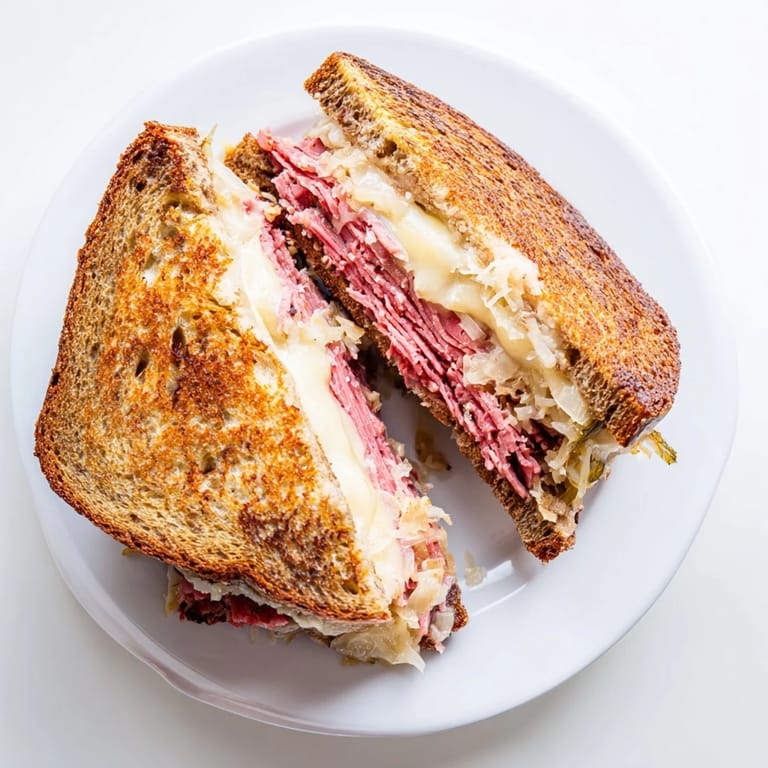
 There's something about a Reuben that stops a conversation mid-sentence. My first real one came from a tiny deli counter where the owner knew exactly how long to toast the rye without burning it, and that moment taught me that this sandwich isn't just layers of ingredients—it's about timing and respect for each component. That crispy-soft bread, the way the cheese catches the pan's heat and becomes almost creamy, the sauerkraut's unexpected brightness against the rich corned beef—it all clicked for me that day. Now whenever I make one, I chase that same balance, because a Reuben done right feels like someone knew you needed something warm and honest.
I made these for a group of friends on a gray Saturday, and watching them take that first bite—the surprised smile when the flavors hit—reminded me why comfort food matters. There's something grounding about feeding people something that tastes like it came from a real kitchen, not a recipe card. That afternoon, the sandwiches were gone in minutes, and someone asked for the formula before they left. It wasn't complicated, but it was real.
Ingredients
- Rye bread: Use a sturdy, seeded variety that won't collapse under the weight of toppings—the bread is your foundation, and it matters more than you'd think.
- Swiss cheese: Two slices per sandwich creates layers that melt into each other, giving you that creamy texture that makes the whole thing sing.
- Corned beef: Buy it freshly sliced from the deli counter if you can; pre-packaged tends toward dryness, and you deserve better.
- Sauerkraut: This is the backbone of the whole sandwich—drain it well or it'll make your bread soggy, but don't squeeze all the personality out of it.
- Russian dressing: Tangy and a little mysterious, it ties everything together with its subtle spice and creamy body.
- Unsalted butter: The conductor of this whole orchestra, creating the crust that makes everything worth eating.
Tired of Takeout? 🥡
Get 10 meals you can make faster than delivery arrives. Seriously.
One email. No spam. Unsubscribe anytime.
Instructions
- Build your sandwiches:
- Spread the dressing on each bread slice, then layer cheese, corned beef, sauerkraut, and another cheese slice on two of the slices. Press the remaining bread on top, dressing-side down, so everything stays in place.
- Butter the outside:
- Spread softened butter evenly on both sides of each sandwich—this is where the magic happens, creating that golden, crispy crust.
- Toast with patience:
- Heat your skillet over medium heat, then place the sandwiches down and let them breathe for 3-4 minutes before you even think about flipping. The gentle pressure with a spatula helps the cheese melt evenly without crushing everything.
- Finish and rest:
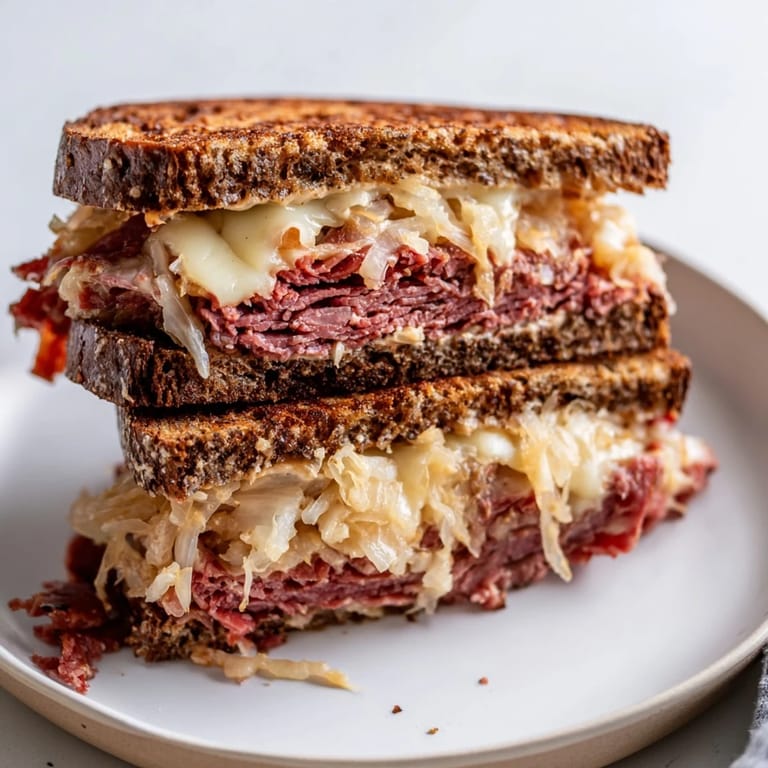
- When both sides are golden and the cheese is visibly melted, pull them from the heat and let them sit for a minute before slicing. This gives the cheese time to set slightly, so you're not eating a molten mess.
 Save to Pinterest
 There was an evening when I made these for someone who'd had a rough week, and they didn't say much while eating, just kept going back for chips and another bite. Sometimes food does more than nourish—it reminds you that someone cares enough to spend twenty minutes on something that tastes like home.
The Art of the Press
The gentle pressure you apply with the spatula while the sandwich cooks isn't about forcing anything—it's about helping the cheese distribute evenly and the bread make full contact with the pan. I used to press too hard, thinking more pressure meant better results, until I realized that slight, consistent pressure is what gives you that golden crust with a creamy center. The motion should feel intentional but never aggressive, like you're coaching the sandwich into its best self rather than forcing it.
Why Sauerkraut Changes Everything
Sauerkraut isn't just a garnish here—it's the voice that keeps this sandwich from becoming predictable. That fermented tang cuts through the richness of the cheese and dressing, waking up your palate with each bite. Without it, you're left with something that tastes incomplete, almost one-dimensional. With it, you get complexity that makes you pause and actually taste what you're eating.
Serving and Storage Wisdom
These sandwiches are best eaten immediately, while the butter is still warm and the cheese hasn't begun to firm up. If you must make them ahead, you can assemble everything except for the cooking step, and toast them just before serving—it only takes those ten minutes anyway. The classic pairing is dill pickles on the side to echo the sauerkraut's tang, though honestly, they're good with almost anything you want to keep the momentum going.
- Serve on a plate or board with pickles and chips for that authentic deli experience.
- If you're making more than two, cook them in batches rather than crowding the pan.
- Leftovers don't really exist with this one, but if they do, eat them cold or reheat gently in a low oven.
 Save to Pinterest
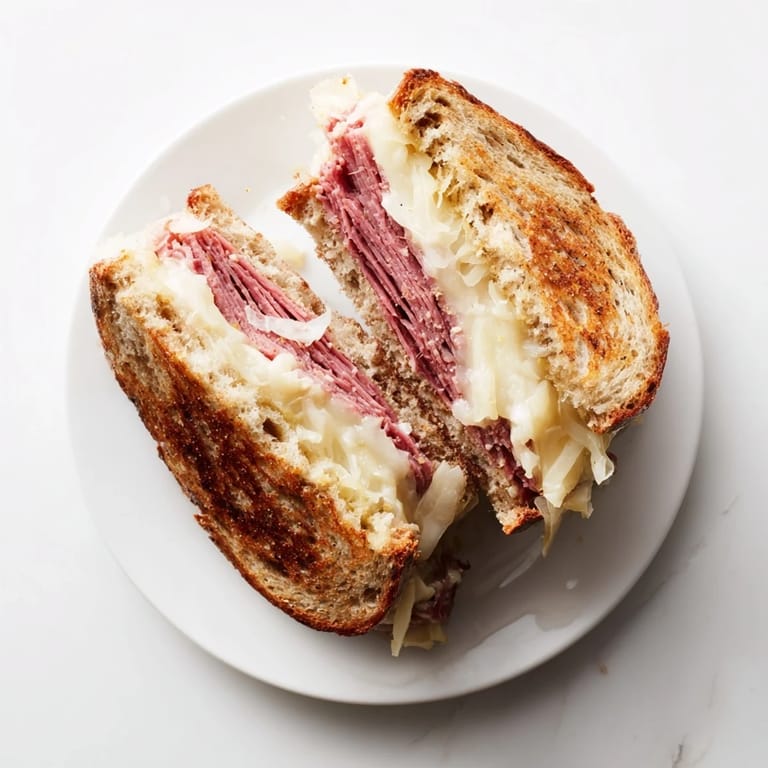
 A Reuben is one of those sandwiches that proves you don't need complexity to create something memorable. Make it with intention, taste as you go, and share it with someone who'll appreciate what you've put together.
Recipe FAQs
- → What type of bread suits this sandwich best?
Rye bread is preferred for its robust flavor and texture that complements the savory fillings.
- → Can I substitute Russian dressing with another sauce?
Yes, Thousand Island dressing works well as an alternative, maintaining a creamy and tangy profile.
- → How is the sandwich cooked to achieve the melted cheese?
The sandwich is buttered on the outside and grilled on medium heat, pressing gently until the bread is golden and the cheese melts.
- → Is it possible to add extra crunch to the fillings?
Toasting the sauerkraut in a pan before assembling enhances its texture and adds crunch.
- → What are suitable sides to accompany this sandwich?
Dill pickles and potato chips are classic sides that pair nicely with the rich flavors.